
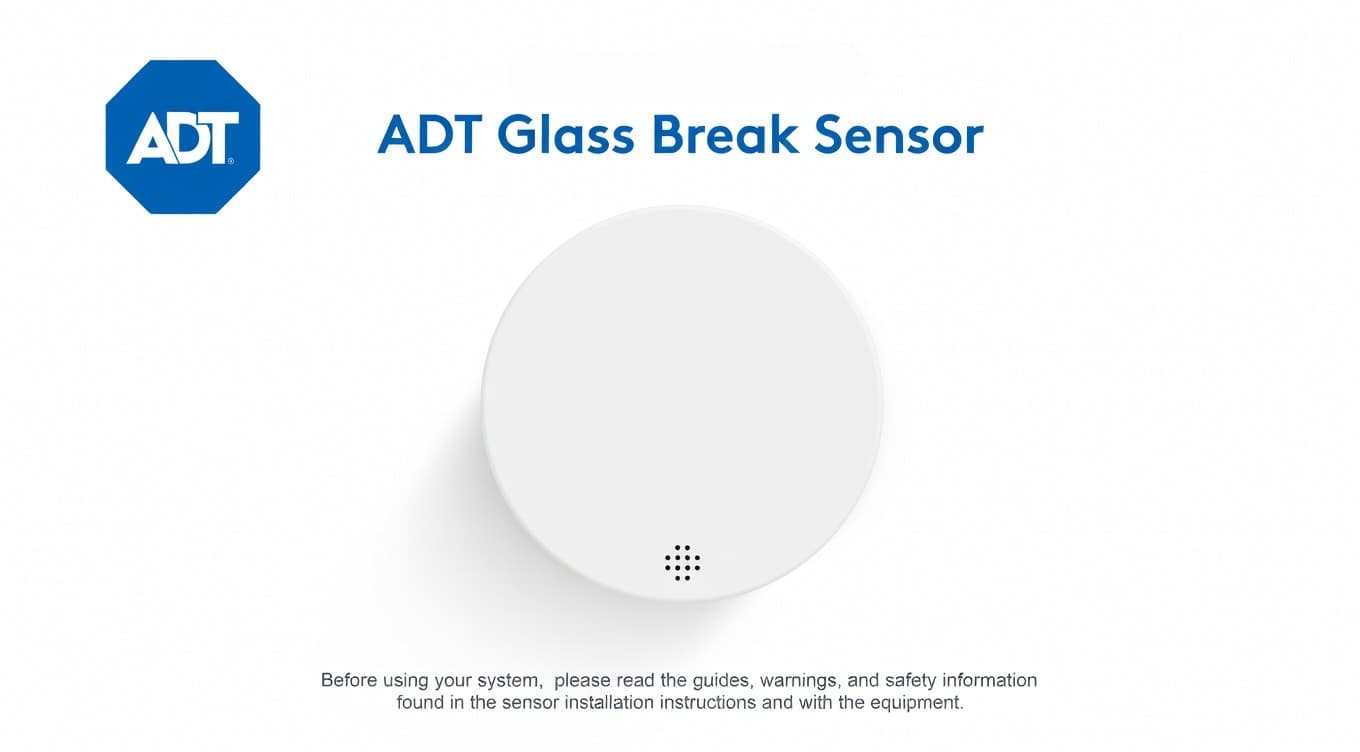
Glass Break Sensor
Advanced acoustic analysis detects the unique frequency and shock pattern of breaking glass. Listens for the sound signature of shattering glass to reduce false alarms and maximize accuracy.
Features
- High-sensitivity microphone
- Wide coverage range
- Encrypted wireless communication
- Tamper alerts
How Acoustic Glass Break Detection Works
The ADT glass break sensor uses a two-stage detection process rather than simply listening for loud sounds. In the first stage, the sensor identifies the initial low-frequency impact sound (the thud of an object striking glass). Within 150 milliseconds, it analyzes the subsequent high-frequency sound signature of shattering glass. Only when both signals match the registered acoustic pattern does the alarm trigger.
This dual-stage analysis is what distinguishes professional-grade glass break detectors from basic sound-activated devices. A door slam, a dropped dish, or television audio does not produce both impact and shatter signatures within the correct time window, which prevents the false alarms that cause homeowners to ignore or disable their systems.
Where to Place a Glass Break Detector
Each ADT glass break sensor covers up to a 25-foot radius in open spaces. A single sensor mounted on the ceiling can cover most standard living rooms or dining rooms containing multiple windows. For large open-plan layouts or great rooms, two sensors placed in opposite corners provide overlapping coverage with no acoustic gaps.
Mount sensors on the ceiling or on the wall opposite the largest glass surface in the room. Sensors need a clear acoustic path to the glass. Avoid placing them inside closets, behind large furniture, or in rooms with heavy sound-absorbing materials like thick carpeting and drapes on all walls. During a professional installation, the technician performs a clap test to confirm each sensor is detecting the full target coverage area before finalizing placement.
FAQs
Will a dropped dish or the TV set off a false alarm?
No. The sensor only triggers when it detects both the low-frequency impact sound and the high-frequency shatter signature within the same 150-millisecond window, which everyday sounds don't produce.
How much of a room does one sensor cover?
Up to a 25-foot radius in open spaces, meaning one ceiling-mounted sensor typically covers a standard living or dining room with multiple windows.
Where should a glass break sensor not be placed?
Avoid closets, behind large furniture, or rooms with heavy sound-absorbing material like thick carpet and drapes on every wall, since the sensor needs a clear acoustic path to the glass.
Related equipment
Often installed alongside the Glass Break Sensor, all part of ADT Monitoring.
- ADT AIO Command PanelThe ADT All-In-One (AIO) Command Panel is a sleek 7-inch touchscreen control center that combines security, automation, and convenience into one elegant device.
- Window & Door SensorsPrecision magnetic contact technology instantly detects unauthorized entry. Two-piece system (sensor + magnet) triggers alerts the moment the circuit is broken for real-time monitoring.
- Motion SensorAdvanced Passive Infrared (PIR) technology detects body-heat movement with precision and triggers alerts when motion is detected.