
Carbon Monoxide Detector
Advanced electrochemical sensing continuously monitors air quality and triggers instant alerts when carbon monoxide (CO) is detected.
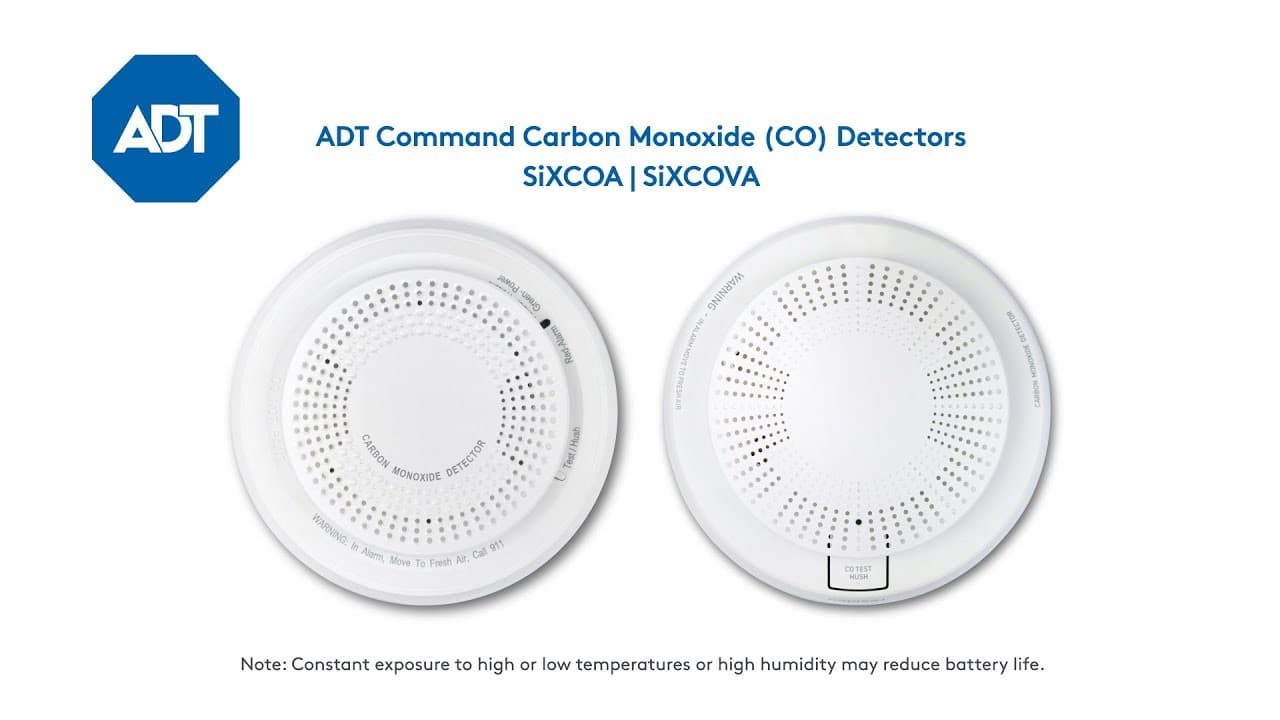
Features
- Built-in siren
- Automatic self-testing
- Low-battery alerts
- Tamper detection
How the ADT CO Detector Works
The ADT carbon monoxide detector uses an electrochemical sensor that reacts chemically with CO molecules in the air. When CO concentration rises above the threshold defined by UL 2034 (the safety standard all residential CO detectors must meet), the sensing element produces an electrical current proportional to CO concentration. This current triggers the alarm signal.
Electrochemical sensing is the most accurate CO detection technology available for residential use. It distinguishes between trace background CO levels common in homes near busy roads and the higher concentrations that indicate a dangerous leak from a malfunctioning furnace, water heater, or vehicle in an attached garage. This selectivity significantly reduces nuisance alarms.
Where to Place CO Detectors in Your Home
Install at least one CO detector on every level of your home, including the basement. The NFPA 720 standard recommends placement within 10 feet of each bedroom door so occupants can hear the alarm while asleep. Mount detectors at breathing height, approximately 5 feet from the floor, since carbon monoxide distributes evenly throughout a room rather than rising or sinking like other gases.
Priority placement zones include: near any gas-burning appliance such as a furnace, water heater, gas dryer, or gas range; within 10 feet of the door connecting your home to an attached garage; and on any floor where people sleep. The ADT CO detector integrates directly with your ADT monitoring system so the monitoring center receives an alert the moment CO is detected, even if everyone in the home is asleep.
FAQs
Where exactly should CO detectors be installed?
On every level of the home including the basement, within 10 feet of each bedroom door, and mounted at roughly breathing height (about 5 feet), since carbon monoxide distributes evenly rather than rising or sinking like other gases.
Why is electrochemical sensing better than other CO detection methods?
It distinguishes trace background CO common near busy roads from the higher concentrations that indicate a real leak, which significantly reduces nuisance alarms compared to less selective sensing types.
Does it integrate with the rest of my security system?
Yes. It connects directly to your ADT monitoring system, so the monitoring center gets an alert the moment CO is detected, even if everyone in the home is asleep.
Related equipment
Often installed alongside the Carbon Monoxide Detector, all part of Fire & Life Safety.