
How to Improve Home Security with Better Locks: ANSI Grades & Costs (2026)
34% of break-ins happen at the front door. See the exact ANSI lock grade, strike plate fix, and smart lock setup an ADT installer recommends, with real forced-entry test data and costs.
Key takeaways
- Most burglars force the front door rather than pick it. The lock grade matters less than most homeowners assume. See which part actually fails first below.
- ANSI Grade 1 is the strongest residential deadbolt standard, but in real forced-entry tests the door frame splits before a Grade 1 lock does.
- Smart locks paired with ADT monitoring add detection on top of prevention: you get an alert the moment any door opens.
- Not sure which upgrades your home actually needs? Get a free entry-point security walk-through from a local ADT technician.
Why Door Locks Matter More Than You Think
According to FBI crime statistics, roughly 34 percent of burglars enter a home through the front door. Another 22 percent use a first-floor window, and 9 percent enter through the back door. That means more than half of all residential break-ins happen at a ground-floor door.
The good news: most residential break-ins are opportunistic. A burglar who encounters genuine resistance at the front door is more likely to move on than to persist. A Grade 1 deadbolt, a reinforced strike plate, and a door sensor create enough resistance to make your home the harder target on the street.
Understanding ANSI Lock Grades
The American National Standards Institute (ANSI) rates door hardware by durability and resistance. The three grades are:
| Grade | Open/Close Cycles | Impact Strikes | Typical Use |
|---|---|---|---|
| Grade 1 | 250,000 | 10 at 75 lbs | Exterior residential and commercial |
| Grade 2 | 150,000 | 5 at 75 lbs | Interior and light exterior |
| Grade 3 | 250 | 2 at 75 lbs | Builder-grade residential (default install) |
Most homes are built with Grade 3 hardware because it is the cheapest option that meets minimum building codes. Upgrading a front door knob or handleset to Grade 1 costs $40 to $80 and takes about 20 minutes with a screwdriver. It is the single highest-return lock upgrade you can make.
The 7 Best Lock Upgrades for Home Security
Grade 1 ANSI Deadbolt
Replace any Grade 2 or 3 hardware with a Grade 1 single-cylinder deadbolt. Tested to 250,000 cycles and 10 forced-entry strikes. Schlage B60N and Medeco M3 are both widely available Grade 1 options.
Reinforced Strike Plate
The stock strike plate on most doors is secured with 3/4-inch screws into the door jamb, not the wall stud. Swap it for a heavy-duty plate (ANSI Grade 1 rated) with 3-inch screws that reach the stud. This single change can triple forced-entry resistance.
Door Frame Reinforcement Kit
Frame reinforcement wraps the door jamb with a steel channel so the frame cannot split. Door Armor and OnGARD make kits that install in under an hour. They reinforce the hinge side, strike side, and door edge simultaneously.
Smart Door Lock
A smart lock adds keypad access, remote locking via app, user-code management, and access logs. All without sacrificing the Grade 1 mechanical deadbolt core. ADT-integrated smart locks also trigger alerts when the door is unlocked outside scheduled hours.
Secondary Bolt or Door Bar
A door security bar (also called a door barricade bar) installs at floor level and resists inward kicks by bracing against the floor. Useful for apartments, rental units, and interior doors to master bedrooms. Requires no tools to install or remove.
Hinge Bolts for Outswing Doors
If your door swings outward, the hinge pins are exposed on the outside and can be driven out with a hammer. Hinge bolts (also called security studs) insert into hinge-side holes and lock the door even if pins are removed.
ADT Door Sensor
A door sensor does not prevent entry but it detects the moment a door opens and sends an alert to the ADT monitoring center within seconds. Combined with a Grade 1 deadbolt, it gives you both prevention and detection. The monitoring center can dispatch police if the alert is unacknowledged.
Locks are the first layer, not the only one
See which of these 7 upgrades your home already has, and which it's missing.
A professional walkthrough checks every exterior door and window and tells you exactly what to reinforce first.
The Part Most People Get Wrong: Door Frames
In forced-entry tests, researchers found that standard residential doors with stock builder-grade strike plates failed in one to two kicks at the lock area, even when fitted with a Grade 1 deadbolt. The deadbolt held. The door frame split around the strike plate.
This happens because builder-installed strike plates use short screws (3/4 inch) that only reach the thin door jamb, not the wall stud behind it. When the door is kicked, those screws pull free in seconds.
How to Fix the Frame
Replace the strike plate with a heavy-duty ANSI-rated version and use 3-inch screws that reach the stud. The stud is the structural wood behind the jamb, usually 1.5 to 2 inches further in. Longer screws alone can increase forced-entry resistance significantly.
For higher security, install a door frame reinforcement kit. These kits wrap the jamb in a steel channel on the hinge side, strike side, and door edge. They are available online for $50 to $100 and install in under 90 minutes with a screwdriver. They are not visible once installed.
Smart Locks: Adding Intelligence to Your Deadbolt
A smart lock replaces your existing deadbolt trim (and sometimes the entire deadbolt) with a motorized version that you can operate from an app, keypad, or voice command. The Grade 1 mechanical core remains the same. What changes is how you control it.
What Smart Locks Add
- Keypad access with unique codes per family member, guest, or contractor. Codes can be time-limited (active only on certain days or hours).
- Remote locking and unlocking from anywhere with a phone signal. Useful when you are away and need to let someone in.
- Access logs showing exactly when each code was used and by whom. No mechanical lock provides this.
- Auto-lock after a set time, so you never accidentally leave the door unlocked.
Smart Locks and ADT Integration
NetSecure360 offers a keyless entry smart lock that integrates with the ADT Control system. When integrated, your smart lock is part of your monitored security system. You can set automations: lock the door when the alarm is armed, get a notification when a specific code is used, or trigger an alert if the door is unlocked at an unusual time.
The lock also appears in the same ADT app that controls your cameras, sensors, and thermostat, so you manage everything from one interface.
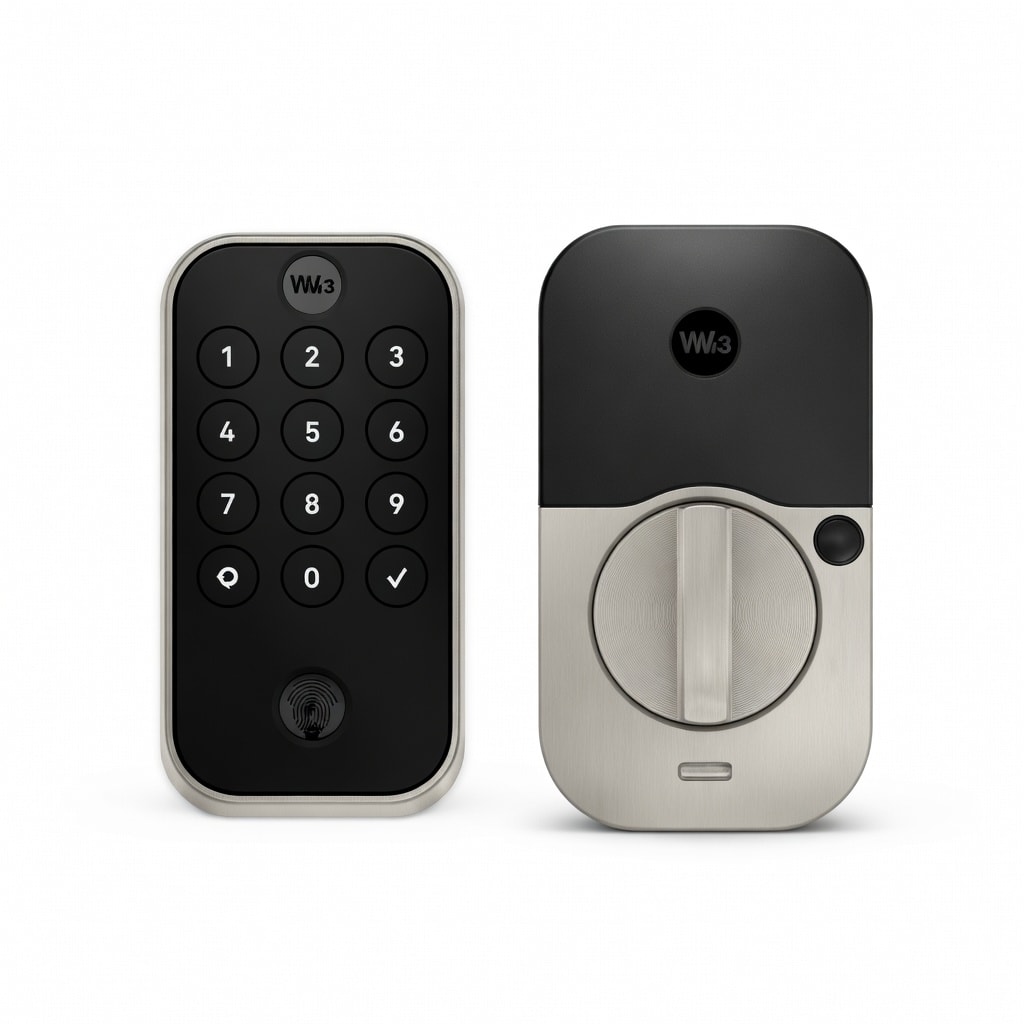
Smart Door Lock
Keypad access, remote locking, and access logs, integrated with the ADT Control system so you can automate it alongside your alarm.
View full specsSecondary Entry Points: What Most People Overlook
Garage Doors
The door between your garage and your home interior is often a hollow-core door with a cheap knob lock. Treat this door the same as your front door: solid core, Grade 1 deadbolt, reinforced frame. Garage door openers can also be intercepted with rolling code grabbers, so use a modern opener that supports rolling code technology (most manufactured after 2000 already do).
Sliding Glass Doors
Sliding doors cannot use a standard deadbolt. See our complete guide on how to secure sliding glass doors for the 8 methods that work, from $10 bar locks to sensor-monitored frames.
When Locks Are Not Enough: Adding a Monitored Layer
Better locks reduce the chance of forced entry. They do not eliminate it, and they do not detect entry through unlocked doors, windows, or other vulnerabilities. A monitored security system adds detection and response on top of prevention.
An ADT door and window sensor triggers a monitored alert the moment any entry point opens. If you cannot be reached to confirm it was intentional, the ADT monitoring center can dispatch police automatically. This means even if someone gets through the lock (by picking, bumping, or using a stolen key), the sensor catches the event and triggers a response.
The combination of a Grade 1 deadbolt, reinforced frame, and a monitored door sensor is significantly more effective than either component alone.
Frequently Asked Questions
What is the best lock for home security?
A Grade 1 ANSI-rated single-cylinder deadbolt with a hardened steel bolt and a minimum 1-inch throw is the strongest standard door lock for residential use. Brands like Schlage and Medeco produce Grade 1 deadbolts tested to resist 250,000 open-and-close cycles and 10 strikes of 75 foot-pounds of force. Pair it with a Grade 1 door frame and a reinforced strike plate secured with 3-inch screws for maximum protection.
What does ANSI Grade 1, 2, or 3 mean on a lock?
ANSI (American National Standards Institute) grades locks by strength. Grade 1 is the highest: tested to withstand 250,000 open-close cycles and 10 strikes of 75 foot-pounds of force. Grade 2 is mid-range: 150,000 cycles and 5 strikes. Grade 3 is residential-light: 100,000 cycles and only 2 strikes. For exterior doors, always use Grade 1. Grade 3 hardware is what most builders install by default.
Are smart locks less secure than traditional deadbolts?
A smart lock is not inherently less secure. Most smart locks use Grade 1 or Grade 2 deadbolt cores. The electronic access layer (keypad or app) is an addition, not a replacement, for the mechanical deadbolt. The main risk is a weak password or PIN. Use a unique, non-obvious code and change it if someone moves out or a code is shared. Smart locks with Z-Wave or ADT integration also log every access event, which no mechanical lock can do.
Does a door sensor work differently from a lock?
Yes. A door lock prevents entry. A door sensor detects whether the door has been opened. If someone breaks through a lock or removes a door from its hinges, the sensor triggers an alert. Locks and sensors serve complementary roles: the lock is your first line of defense, the sensor is your early warning system. Pairing a Grade 1 deadbolt with an ADT door sensor and 24/7 monitoring gives you both prevention and detection.
How much does a Grade 1 deadbolt cost?
A Grade 1 single-cylinder deadbolt costs $40 to $80 at most hardware stores (Schlage B60N is a common example at around $50). A smart lock with app access and keypad costs $100 to $250. Professional installation adds $50 to $150. Reinforced strike plates and door frame kits run $20 to $60. The total upgrade cost for one exterior door is typically $100 to $400 depending on how many components you replace.
What is the weakest point of a door: the lock or the frame?
For most residential doors, the frame and strike plate are weaker than the lock. In forced-entry tests, doors with standard builder-grade strike plates secured with short (3/4-inch) screws fail in one to two kicks, even with a Grade 1 deadbolt installed. A heavy-duty strike plate with 3-inch screws that reach the wall stud, or a door frame reinforcement kit like the Door Armor lineup, can triple the number of kicks required to breach the door.
Add Monitoring to Your Lock Upgrades
Better locks prevent forced entry. ADT door sensors detect it. A monitored system with smart locks, door sensors, and 24/7 professional monitoring gives you both. NetSecure360 offers the full system and ties it to one app.
More home security guides
All articles →How to Upgrade Home Security: A Room-by-Room Checklist (2026)
A whole-home upgrade checklist covering entry points, sensors, cameras, monitoring, and smart home, room by room, not just a new lock.
How to Secure Sliding Glass Doors: 8 Methods That Actually Work (2026)
Sliding glass doors are the easiest entry point for burglars. Here are 8 proven methods to secure them, from $10 bar locks to ADT-monitored sensors.
Smart Home Security: How ADT and Google Nest Work Together for Complete Protection
See exactly how ADT professional monitoring and Google Nest cameras, locks, and thermostats combine into one connected system, all in a single app.